Showing posts with label egypt. Show all posts

Wednesday, 23 February 2011

Hold the front page ?

Indefinitely ?

Last night I was watching Newsnight, with a group of representatives from the 'establishment' media (The Financial Times, The Guardian and the BBC) and someone from 'Google'. It's interesting to see this lot come somewhere in between justifying their own existence and being media naysayers.

All of this talk about online news and media killing the traditional printed press, that the rise of the 'citizen journalist' doing 'quality' hacks out of jobs. I can't see it contributing to the unemployment numbers any time soon. It has, however, shown that it provides an invaluable multiple of sources at seminal events, as shown in Egypt, Tunisia and Libya.

Newsnight's piece included some location reporting about how a local newsagents was suffering because not so many people were having papers delivered anymore. This is a natural evolution of information exchange, in the same way that I commented recently on the demise of the posted written word. More and more people want their news there as it happens, live and in bite-size chunks that are easily consumed in the stolen moments of a busy life. Letters have been so much more effectively replaced with email for all but certain messages. Most communication just isn't that important that it needs committing to a piece of dead tree and physically dragging from one end of the country to the other, or is important enough that it can't wait the time needed to do that.

Did the press die with the advent or radio, or television ? No. Sure they would have seen a drop in circulation, as some people took advantage of the new medium, but all are still going quite strong. Truth is in 21st century society we are consuming much more information, but we are also accepting if from a variety of sources.

The internet isn't really all that new anymore, we are just exploring new ways of interfacing with it, as technology allows. Apple's Ipad has reinvigorated a previously failed market, that of the tablet pc. This old idea that your computer is this grey or white box on the side of your desk doesn't hold true any more. Our phones are now more like personal communications devices in every way, rather than just in making and receiving calls.

The industry observers, or representatives remarked that the advantage of a 'live' (as a pose to 'dead') medium like a web page or tablet pc content is that the publisher has a relationship with the reader, they can see who reads what, and for how long. This helps them understand more efficiently what stories are actually worth 'printing' and which are not. With a printed newspaper, you don't actually read all of it, you skim through it, sifting out the stuff you don't like or just don't have time to read. An attractive byline or picture will grab your attention and draw you into the article. This works the same if it's a book cover, content in a newspaper or topics on a website.

Jeremy Paxman
Jeremy Paxman was trying to provoke reaction, or at least debate by asking if it was a good thing that people get a set of news items that's personal to them, as it encourages them to be increasingly more insular and self absorbed. Is this really the case ? I would agree that we all seem to live these days in our own little worlds, shutting out the physical world and people around us and absorbing ourselves in our smartphones, and blocking the interruptions with headphones. That is the bad thing, or sad thing about the use of this technology. Personally, I have stopped listening to music on my headphones on the bus because I don't like to be that cocooned form the world around me. It's also, despite whatever you may think about sound levels an irritant to the other passengers. Having said that, I am sat there either surfing content on my Blackberry or reading from my Kindle, but not all the time. There are times when I sit there, just observing the world that is passing around me, and taking in the effect of the different people that get onto and off the bus as I travel from one place to the other.

If people are disposed to be narrowminded, I don't think that technology is to blame for that personality trait. Nor would the lack of it make them any more enlightened. In the past people would perhaps polarize to prefer one paper or another, depending on their political standpoint. As much as mainstream politics doesn't recongnise it, perhaps the media just doesn't see that there isn't such a thing as a 'labour viewer/reader' or a 'Tory viewer/reader'.

Have we all discovered that we are not that different, and this is why politics seems to inhabit this grey mish-mash middle-ground ? Is it really for the publisher of any content to try and decided what I do or don't get to read or view ? Surely that's some sort of censorship, which is as unacceptable as it is unaccountable. In reality of course, what you print or show can influence opinion, if it didn't no one would spend money on advertising. Surely people need to take some personal responsibility to have an open minded view on things and not just trust one source. That is one of the beauties of the 'Citizen reporter' model. There's no censor. (There's also no editor making sure it's relevant or acceptable, or interesting. Editing is just a light version of censorship - right ?).

I've never heard someone say, 'I prefer Google to Yahoo, because that Google content is sooooo right/left wing'. They may say they prefer one or the other because of the page layout, and the responsiveness of the content. Maybe this means that instead of cheating ourselves into schoolyard style political camps, we are actually just reading the content, and judging the content on, well... the content ?

There are popularist online sources of information, and those that offer a more reasoned, rational, thought out view. This isn't something new, the printed and visual media are full of examples of both schools of thought. Always the quick and easy headline/byline/link.
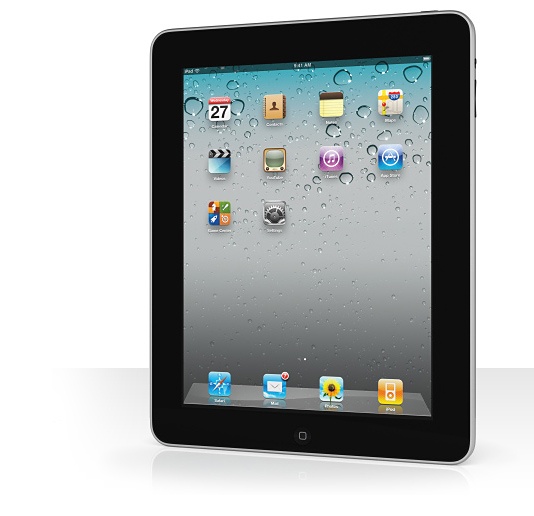
There's lots of hot air about 'who controls the content'. There is, I suppose some validity to this in some areas, Apple for example are rather draconian about their content control and access to their soft and hardware. Having said that, you can still google, or yahoo search (or bing) from an iPhone. There are some programs or aps that you will never be able to get on an iPhone or iPod, but there are some things you will never see on BBC1, but that you may find on Channel 4. Does anyone only really every watch only one channel on TV ? No. They don't.

Maybe the reality lies somewhere in that media consumption and publishing is evolving as we get more used to these new technologies. What's different, is that it is the public that are leading the change, creating the groundswell. It's starting the other way around. Radio, TV & printed press, but the very nature of their respective technologies had to be driven into existence.

As for this supposed point about it doing scores of 'quality' journalists out of a job.. who is it that defines they are of quality ? If themselves, well, self praise really doesn't form any sort of recommendation. There are also scores of journalists, papers and TV channels that will propagate any old rubbish, accurate, true or otherwise that won't be missed. So if they are put out of a job by similar individuals that aren't professionals, at least we can comfort ourselves with the fact that we are not indirectly paying them for their .... rubbish.

Saturday, 5 February 2011

Walk like an Egyptian ?

I've made some blog entries this week, and not mentioned, not even once all the stuff that's happening in Egypt. Should I ?

Well I guess there's no serious obligation on my part, but it's a very momentous pimple on the teenage like spotty face of history.

Egyptian uprising... (photo from CNN's website)
The peoples of Egypt have collectively had enough of the corruption or accountability in a regime that has been led by the same man for the last 30 years (President Hosni Mubarak).

The western press are showing us all the images of what was seemingly at one point a 'velvet' revolution, but that has steadily escalated as the regime enlists fists of those faithful to it. Thankfully the army have quite sensibly stayed out of it. The generals seem to back Mubarak, but the actual soldiers on the street are not motivated to start firing on their countrymen and women. No images of students being shot in front of a tank on international television then.

The people want freedom, self determination. They seem to want that holy grail of things, democracy. Good for them. As governments around the world try increasingly to tread a fine line between not supporting anybody and condoning any actions against the people of Egypt. Warm cooing words of encouragement that violence not be used against the citizens, that peaceful protest continue, and be allowed to do so.

The Egyptian government had initially cut off the mobile phone network, and the internet. Although they have now turned the internet back on, it is a reminder that any and all of our freedoms can be taken away just as easily. Maybe not as symbolically as the flicking of a switch, but the government here has similar powers. So before you all rush out and buy CB radios, lets calm things back down a bit.

What I was increasingly annoyed about was the mumbling sentiments of those on BBC Questiontime passing comment on what the Egyptian people should or shouldn't do, and on what sort of government is likely to replace Mubarak's. It's all balloon filling really. Surely (as was said by one of the guests) the destiny of the political system in Egypt is in the hands of the Egyptian people, where it should be. It is not for us to say which type of democracy we would like to have. It carries as much impact on the outcome as does a child wistfully wishing for a £600 new computer at Christmas. (Take note Chloe).

So what happens if democracy flourishes in Egypt, and the people vote, and they chose, and we don't like what they chose ? What if they vote, for example to become a Muslim fundamentalist state ? These are the questions that are being thrown about by the BBC and others.

Opinions are like noses, they all smell.

A fundamentalist state may not be the 'preferred' choice of the western governments, but you know what, it isn't their (our) choice to make. I'm pretty convinced that the people of Egypt weren't sat round their television sets last may pontificating about the likelihood of a coalition government being formed in the UK, and what that would mean for them.

I'm not an isolationist, I do think we should be out there and engaging with the other countries of the world, but this presumption that we have a part to play in the political history of other countries is at best misguided interference. At worst, arrogant meddling.

After all, didn't the Egyptians have a working society a good deal before the formation of the 'mother of parliaments' ?